
 Dr. Lauren Hayes
Last updated: November 21, 2025
If recurring athlete’s foot, stubborn nail fungus, or itchy ringworm keep coming back, you are not alone. Many readers want natural options that actually work—without harsh side effects. This guide dives deep into antifungal essential oils, translating lab evidence into safe, step-by-step methods you can use at home for common fungal problems.
Unlike scattered tips online, this resource focuses on what’s proven, what’s safe, and what’s realistic for busy adults and caregivers. We compare individual oils like tea tree, clove, oregano, lavender, and eucalyptus, and explain when to see a clinician. You’ll learn dilution, frequency, and how long results typically take—so you can use natural remedies confidently.
We also address critical questions: antifungal essential oils vs. medication, which oil fits which infection, and how to avoid irritation or allergic reactions. The goal is simple: help you choose wisely, apply correctly, and track progress safely—so you feel in control of your care.
Key takeaways
- Tea tree, clove, oregano, lavender, and eucalyptus show antifungal effects in research against dermatophytes and yeasts.
- Correct dilution (generally 0.5%–2% for skin; up to 5% for nails) is essential for safety and results.
- Improvements can appear in 1–3 weeks for skin fungus; nails often need 3–6 months of consistent care.
- Use blends or singles strategically; consider antifungal essential oil blend only if tolerated.
- Stop and seek care if pain, spreading infection, diabetes-related foot problems, or no improvement after 2–4 weeks.
Ready to learn what works, how to apply it, and when to get help? Keep reading for a clear, evidence-informed plan tailored to everyday life.
What Are Antifungal Essential Oils and How Do They Work?
Essential oils are concentrated plant extracts rich in bioactive compounds such as terpenes, phenols, and alcohols. Several of these compounds show activity against dermatophytes (the fungi behind athlete’s foot and ringworm) and yeasts like Candida. In practice, antifungal essential oils may help manage mild, localized infections on skin and nails when properly diluted and consistently used.
They are not magic bullets. The key is understanding when these oils are appropriate, how they compare to medications, and how to avoid irritation. This section explains how fungi behave, how oils exert antifungal effects, and what research says about their potential.
Understanding Fungal Infections and Their Common Symptoms
Fungi thrive in warm, moist areas of the body—commonly between toes, under nails, and in skin folds. Dermatophytes primarily target keratin in skin, hair, and nails, causing athlete’s foot (tinea pedis), ringworm (tinea corporis), and jock itch (tinea cruris). Yeasts like Candida can overgrow on the skin, mouth, or groin, producing redness, scaling, and discomfort.
Symptoms often include itching, burning, peeling, and sometimes fissures or small blisters for athlete’s foot. Ringworm typically appears as ring-shaped, scaly patches with clearer centers. Nail fungus may show thickened, discolored, and brittle nails that detach from the nail bed over time, especially in toenails exposed to damp shoes.
Risk factors include sweating, occlusive footwear, shared locker rooms, minor skin injuries, diabetes, immunosuppression, and prior antibiotic use. Recurrent infections may reflect environmental exposure or incomplete eradication. Addressing hygiene and moisture control alongside treatment is crucial to prevent cycles of reinfection.
Diagnosis is often clinical, but persistent or atypical cases may need testing. Seek medical advice for severe pain, spreading redness, fever, drainage, or if you have diabetes-related foot concerns. Home care with natural remedies for fungal infections should be limited to mild, localized cases in otherwise healthy adults.
Think of fungus like weeds: if conditions stay moist and dark, growth persists. To succeed, you’ll combine targeted antifungal action with environmental changes—dry socks, breathable shoes, and consistent hygiene—to give the skin or nails a chance to recover.
How Do Essential Oils Exhibit Antifungal Properties?
Many oils disrupt fungal cell membranes, affecting ergosterol, a key component of fungal membranes. Compounds such as terpinen-4-ol (tea tree), eugenol (clove), carvacrol and thymol (oregano) can increase membrane permeability, leading to leakage of cellular contents and inhibited growth.
Some oils may hinder hyphal growth or biofilm formation, both of which help fungi persist. Biofilms, similar to protective shelters, can make fungi less responsive to treatment. By interfering with these structures, select oils may enhance access to the organisms and reduce recurrence when paired with good hygiene.
Essential oils also show antioxidant and anti-inflammatory effects in lab studies, which can help calm irritated skin. However, potency varies by oil, species of fungus, and concentration. This is why a standardized, appropriate dilution is vital for safe skin application and for delivering enough active compounds to the target area.
Real-world effectiveness depends on penetration. Skin issues are more accessible, but nails are dense and slow-growing. Penetration challenges partly explain why nail fungus takes months to improve, even with strong agents. Think of nails as a thick barrier—consistent daily exposure over weeks to months is needed.
Because oils act via multiple mechanisms, some individuals find an antifungal essential oil blend helpful. Blends can combine membrane-disrupting and anti-inflammatory compounds. Just remember that more ingredients can also increase the risk of irritation—so start simple and patch test.
Scientific Evidence Behind Essential Oils Versus Fungal Growth
Laboratory studies repeatedly show that tea tree, clove, oregano, lavender, and eucalyptus oils inhibit dermatophytes and Candida species. For example, terpinen-4-ol and eugenol demonstrate antifungal activity across multiple strains in vitro. Oregano’s carvacrol and thymol have also shown strong inhibitory effects, particularly in lab settings.
Clinical evidence is more limited but growing. Small trials and case series suggest tea tree may help mild tinea pedis, and topical applications of certain oils can reduce symptoms when correctly diluted and used consistently. Nails remain the toughest target. Even with pharmaceuticals, cure rates are modest; oils may assist symptom control and gradual cosmetic improvement over months.
It is important to compare antifungal essential oils vs. medication honestly. Medications have larger clinical datasets and defined cure rates. Essential oils may be considered for mild cases, adjunctive care, or for individuals who prefer natural approaches or who cannot tolerate certain medications. A stepwise approach—starting with proper hygiene and topical care—makes sense for many mild infections.
One practical way to evaluate progress is to set 2–4-week checkpoints for skin infections and monthly photos for nail fungus. If you are not improving or symptoms worsen, escalate care and consult a clinician. Measured expectations help you use natural tools effectively without delaying needed treatment.
“Essential oils can support care for mild, localized fungal infections when used safely and consistently, but they are not substitutes for timely medical evaluation in severe or high-risk cases.”
– Dermatology clinical guidance summary
In short, the lab rationale is strong, but home results hinge on proper selection, dilution, application, and patience. Combine oils with lifestyle changes to tip the balance in your favor.
The Top 5 Antifungal Essential Oils for Home and Health
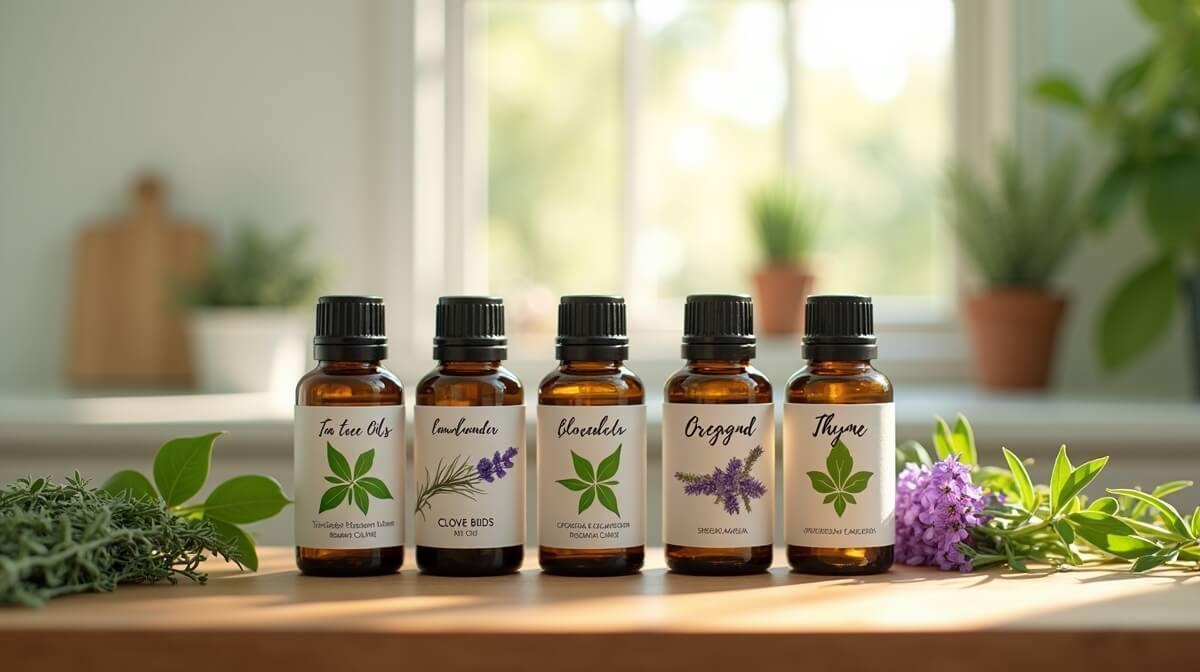
Among many oils, a handful consistently appear in antifungal research: tea tree, clove, oregano, lavender, and eucalyptus. Each contains distinct active compounds and safety profiles. Choosing the right oil for the right job, then applying it correctly, can improve outcomes and minimize irritation.
Below, we examine evidence, ideal uses, and practical application strategies for each oil. You’ll also learn who should avoid specific oils and how to adjust dilution based on skin sensitivity and the target area (skin versus nails).
Tea Tree Oil – Proven Benefits and Common Uses Against Fungi
Tea tree (Melaleuca alternifolia) is the most recognized option for essential oil for athlete’s foot and other superficial fungal issues. Its key component, terpinen-4-ol, shows broad activity against dermatophytes and Candida in lab studies. In small clinical trials, tea tree has improved symptoms like scaling and itching when used topically in proper dilutions.
For mild athlete’s foot, a 1%–2% dilution in a carrier oil applied twice daily for 2–4 weeks is a reasonable starting point. For nails, consider up to 5% if tolerated, applied once or twice daily to the nail plate and surrounding skin, keeping nails trimmed and dry. Expect gradual progress; document changes monthly with photos to stay objective.
When you buy tea tree oil for fungus, choose reputable brands that provide batch testing and botanical names. Store in a cool, dark place to preserve potency. Freshness matters because oxidized oils may be more irritating. Always patch test a 1% dilution on the inner forearm before broader use.
Tea tree is generally well-tolerated at low dilutions. However, undiluted use is a common source of irritation. Avoid mucous membranes and the eye area. If redness or burning develops, wash with soap and water, then discontinue. If you have chronic skin conditions like eczema, start at the lower end of dilution (0.5%–1%).
Real-world tip: After exercise, cleanse and dry feet, then apply your diluted tea tree. Rotate two pairs of socks daily and disinfect shoes weekly. This environmental approach helps reduce reinfection cycles and complements the oil’s antifungal effect.
Clove Oil – Powerful Antifungal Effects and Best Application Methods
Clove (Syzygium aromaticum) contains eugenol, a potent phenolic compound with strong antifungal activity in vitro. Many readers explore clove oil for toenail fungus because of its potency and warming sensation. While promising, clove can be irritating at higher concentrations, so thoughtful dilution and application are essential.
For skin fungus, a 0.5%–1% dilution is often sufficient. For nails, consider up to 3%–4% if tolerated, once daily. A practical method is to apply a thin film to clean, dry nails, then wait at least 10 minutes before putting on socks or shoes. Combine with careful nail trimming to reduce thickness and improve penetration over time.
Never apply clove oil undiluted. Eugenol can sensitize the skin; start low if you are sensitive. People with bleeding disorders or on anticoagulants should be cautious, as eugenol may theoretically increase bleeding risk when used in large areas or concentrated forms. Avoid during pregnancy unless your clinician approves.
Clove pairs well with tea tree in an antifungal essential oil blend if you tolerate both. For example, a 2% total blend could be 1% tea tree + 1% clove in jojoba oil. Test the mixture on a small area for 48 hours before wider use. If itching or burning develops, step down to a single oil strategy.
Tip for toenails: After a warm foot soak and thorough drying, lightly buff the nail surface, then apply diluted clove to maximize contact. This routine, repeated daily for months, may improve cosmetic appearance while you monitor for new, clearer nail growth from the base.
Oregano Oil – Potency, Precautions, and Effectiveness Explained
Oregano (Origanum vulgare) is one of the most potent options due to carvacrol and thymol. In lab studies, these compounds show strong activity against dermatophytes and Candida. However, oregano is also one of the most irritating oils on skin, making precise dilution and cautious application essential for safety.
For skin infections, many adults start at 0.25%–0.5% to gauge tolerance, increasing to 1% only if no irritation occurs. For nails, 2%–3% may be used with care once daily. Because oregano can sting, avoid broken skin and sensitive areas. Do not use on children, and avoid during pregnancy unless advised by a clinician.
Some readers consider oral oregano capsules for systemic support. This guide focuses on topical, evidence-aligned strategies. If you consider ingestion, speak with your healthcare professional first, since oregano can interact with medications and irritate the GI tract.
Oregano may be the right choice when a stronger topical is needed and your skin tolerates it. Alternately, rotating a milder oil in the morning and oregano in the evening can reduce irritation. Always patch test and monitor for cumulative sensitization over several days.
Because oregano is so potent, it may be a better adjunct to habits that reduce moisture: breathable footwear, changing socks midday, and disinfecting shoe interiors. Think of oregano as a targeted tool within a comprehensive plan—not a stand-alone fix.
Lavender and Eucalyptus Oils – Lesser Known, But Effective Antifungals
Lavender (Lavandula angustifolia) is more than a calming scent. In vitro studies show activity against dermatophytes and Candida, and it’s often gentler on skin compared with “hotter” oils like oregano. A 1%–2% dilution can complement daily foot care, particularly for people who need a soothing, better-tolerated option.
Eucalyptus (Eucalyptus globulus or radiata) contains 1,8-cineole, offering antimicrobial and decongestant properties. Though less studied for fungus than tea tree or oregano, it shows antifungal effects in lab work and functions well in blends where breathability and refreshment are desired. Keep dilutions conservative (0.5%–1% for skin) due to potential irritation.
Both oils may be useful for preventive maintenance after successful treatment. For example, a 0.5% lavender application to high-risk areas once daily can help maintain skin comfort while you maintain dry, clean conditions. Eucalyptus can be added at 0.25%–0.5% to an evening foot massage oil to support freshness.
For nails, lavender is best as a companion oil in blends rather than a sole agent. Eucalyptus may support overall foot hygiene, but penetration through the nail remains limited. Pair either with consistent nail care and protective footwear strategies.
As always, patch test. Although lavender is generally well tolerated, any essential oil can cause reactions in sensitive individuals—especially if oxidized or old. Store bottles tightly capped and out of heat and light.
Comparing Antifungal Essential Oils: Efficacy, Safety, and Suitability
Different infections respond differently based on fungal species, skin thickness, moisture, and your tolerance. Below, we compare common scenarios and the oils that fit best, while also weighing safety for sensitive skin and special populations.
Use this section to match your case—athlete’s foot, ringworm, or nail fungus—to a practical at-home plan. Always escalate to medical care if you see worsening or no improvement within a reasonable window.
Which Essential Oil Is Best for Athlete’s Foot, Ringworm, and Nail Fungus?
For athlete’s foot, start with tea tree at 1%–2% twice daily, given its balance of efficacy and tolerability, plus a strong hygiene plan. If symptoms persist but skin tolerates stronger agents, consider adding a nightly oregano application at 0.5%–1% or a clove-based blend. For ringworm, tea tree or lavender at 1%–2% plus strict dryness and clothing hygiene often helps in mild cases.
Nail fungus is more resistant. Tea tree and clove at higher, careful dilutions (2%–5% combined total) are common choices, with oregano used cautiously due to irritation. Improve penetration by thinning nails and keeping them short, and expect months for visible progress.
| Condition | Typically Considered Oils | Starting Dilution | Application Frequency | Notes |
|---|---|---|---|---|
| Athlete’s foot (tinea pedis) | Tea tree, oregano (carefully), lavender | 1%–2% (skin); oregano 0.5%–1% | 2x/day | Dry feet thoroughly; rotate socks; disinfect shoes weekly. |
| Ringworm (tinea corporis) | Tea tree, lavender, clove | 1%–2% | 2x/day | Treat margins beyond visible rash; wash fabrics hot. |
| Nail fungus (onychomycosis) | Tea tree, clove, oregano (cautiously) | 2%–5% (nails) | 1–2x/day | Thin/trimm nails; expect months; photograph monthly. |
| Candida intertrigo (skin folds) | Tea tree, lavender | 0.5%–1% | 1–2x/day | Keep folds dry; barrier creams may help comfort. |
Remember, dilution is your safety margin. If burning or redness appears, wash off and decrease concentration or frequency. In sensitive areas, choose gentler oils like lavender and maintain strict dryness and airflow.
If you have diabetes, neuropathy, poor circulation, or immune suppression, consult a clinician before starting home treatment—foot infections can progress quickly and require medical oversight.
It’s helpful to think in phases: calm the symptoms, maintain dryness and cleanliness, then prevent recurrence. Oils can support each phase when carefully matched to your skin and lifestyle.
Essential Oil Blends vs. Single Oils – What Offers Better Results?
Blends can combine complementary mechanisms—membrane disruption from tea tree, phenolic potency from clove or oregano, and skin-calming from lavender. This synergy may be useful for stubborn cases. However, more ingredients can mean a higher risk of irritation, so start simple and build cautiously.
Singles are best for sensitive skin and for identifying which oil you tolerate. Once you know your skin’s response, a modest blend can be trialed. Keep total essential oil concentration within recommended ranges to reduce sensitization risk over time.
If you choose to build a blend, consider this stepwise plan to maximize safety and clarity of results. Record your recipe and changes, so if irritation occurs, you can pinpoint the cause and adjust intelligently.
- Start with one oil (e.g., tea tree 1% for athlete’s foot) for 7 days and track symptoms.
- If tolerated but results plateau, add one companion oil (e.g., lavender 0.5%) for skin comfort.
- For stubborn areas, consider adding clove 0.5% or oregano 0.25% (only if no irritation so far).
- Limit total essential oil concentration to 2% on skin, up to 5% on nails.
- Patch test every new blend for 24–48 hours on the inner forearm.
- Change only one variable at a time (concentration, frequency, or ingredient).
- Stop immediately if burning, swelling, or rash appears; revert to a gentler single oil.
- Reassess every 2–4 weeks; simplify if results are inconsistent or skin becomes reactive.
A blend is not automatically stronger in practice if it triggers irritation. Comfort and consistency often deliver better outcomes than an aggressive formula you cannot sustain daily.
For nails, a two-oil blend such as tea tree + clove may strike a balance between potency and tolerance. Massage around cuticles and the underside edge of the nail if accessible, always keeping the area dry afterward.
Safety Precautions: Who Should Avoid Certain Antifungal Oils?
Some individuals should avoid or limit certain oils due to higher irritation potential or specific physiologic concerns. Oregano and clove are relatively “hot”; tea tree and lavender are typically milder. Always consider your personal health context before starting any new topical regimen.
Broadly, the following groups should seek individualized medical advice before use. When in doubt, choose gentler options at low dilutions and stop at the first sign of intolerance.
- Pregnant or breastfeeding individuals (especially with oregano or clove)
- Children and infants (skin is more permeable and reactive)
- People with eczema, psoriasis, or very sensitive skin
- People with diabetes, neuropathy, or poor circulation (especially for foot infections)
- Individuals on anticoagulants or with bleeding disorders (clove/eugenol caution)
- Those with known fragrance or essential oil allergies
- Immunocompromised individuals (seek medical oversight)
If your skin is dry or barrier-impaired, dilute more than average (e.g., 0.25%–0.5%) and add a plain, fragrance-free moisturizer to support healing. Consider applying moisturizer first, then your diluted oil 10–15 minutes later to reduce stinging.
Finally, store oils safely, tightly capped, and out of children’s reach. Oxidized oils are more irritating—replace bottles that smell sharp, resinous, or off compared with their original aroma.
Practical Guide: How to Use Antifungal Essential Oils Safely
Safe, consistent technique is the foundation of effective home care. The basics: correct dilution, clean and dry skin before application, and realistic frequency for your schedule. Below you’ll find clear instructions and practical routines for common fungal problems.
When choosing a carrier oil, prioritize stability and skin compatibility. Jojoba, fractionated coconut, and squalane are standout options for daily use on feet and nails.
Dilution Techniques and Carrier Oils for Maximum Safety
Most adult skin applications fall between 0.5% and 2% total essential oil. Nails can tolerate up to 5% if monitored. As a rule of thumb, 1% equals about 1 drop essential oil per 5 mL (1 teaspoon) of carrier. Always measure carefully and label your blend with date and concentration.
For a 2% dilution, combine ~2 drops per 5 mL carrier; for a 0.5% dilution, use ~1 drop per 10 mL carrier. Drop size varies by bottle, so consider using a scale or pipette for accuracy in larger batches. Mix small quantities you can finish within 8–12 weeks to reduce oxidation.
Carrier oils influence feel and absorption. Jojoba closely mimics skin lipids and resists rancidity. Fractionated coconut oil is lightweight and stable. Squalane absorbs rapidly with minimal residue. For very sensitive skin, consider adding a few drops of vitamin E to your carrier to support barrier function.
Store blends in amber glass with a dropper or treatment pump. Keep away from heat and sunlight. Note any base skin issues you have and adjust dilution accordingly. If you struggle with stinging despite low concentrations, try applying your regular moisturizer first.
- Jojoba oil: stable, skin-mimicking, excellent for daily foot care
- Fractionated coconut oil: lightweight, non-greasy, popular for blends
- Sweet almond oil: emollient, but avoid if nut-allergic
- Grapeseed oil: light texture, budget-friendly
- Squalane: elegant feel, quick absorption
Avoid water-based DIY mixes unless you use a proper emulsifier; oils and water do not mix and can separate, leading to uneven dosing. For foot soaks, do not add essential oils without dispersants, as undiluted droplets can contact skin directly.
Patch test every new formula. Apply a pea-sized amount of your diluted blend to the inner forearm twice daily for 48 hours. If no reaction occurs, proceed to target areas.
Step-by-Step Application Methods for Common Fungal Problems
Consistency beats intensity. Choose methods you can sustain. Below is a practical routine for three common issues—athlete’s foot, ringworm, and nail fungus—using conservative starting dilutions you can adjust after patch testing.
For athlete’s foot, start with tea tree 1% in jojoba twice daily. For ringworm, tea tree or lavender 1%–2% applied to and beyond the visible margin works well. For nails, tea tree + clove up to 3%–4% total once daily is a manageable starting plan.
- Cleanse the area with gentle soap; rinse and dry thoroughly (pat dry between toes).
- Inspect skin or nails; trim nails straight across and thin thick areas gently.
- Apply your diluted oil blend: thin, even layer to affected and surrounding skin.
- Allow at least 10 minutes of open-air drying before socks or clothing.
- For nails, massage into the cuticle and underside edge if possible.
- Change into clean, breathable socks; rotate footwear to stay dry.
- Disinfect shoe interiors weekly; wash affected fabrics hot and dry fully.
- Reassess every 7–14 days; adjust dilution or frequency as tolerated.
For ringworm, extend application 1–2 cm beyond the rash’s outer ring to treat microscopic spread. For athlete’s foot, pay special attention to web spaces between toes, where moisture lingers. For nails, photograph monthly to track new growth from the nail base—progress can be slow but steady.
If irritation occurs, step down dilution or switch to a gentler oil like lavender at 0.5%–1%. If symptoms intensify or spread, stop and seek medical advice. Do not occlude (cover tightly) treated areas unless directed by a clinician.
How Often Should You Apply Antifungal Oils for Best Results?
For skin infections, 1–2 applications per day is typical. Morning and evening routines fit most schedules and keep exposure steady. For nails, once daily is acceptable, with a second application added only if you tolerate it and have time for proper drying.
Expect symptom relief like itching and scaling to improve within 1–3 weeks if the regimen and hygiene are solid. Nails require patience: visible improvement often takes 6–12 weeks, while full regrowth may take 3–6 months for fingernails and 6–12 months for toenails.
Frequency must balance potency and skin comfort. If your skin feels tight or irritated, reduce to once daily or every other day for a week, then reassess. Long-term success comes from choosing a schedule you can maintain without flare-ups.
Pair frequency with environmental control: daily sock changes, breathable shoes, and drying after showers. This combination maximizes the value of every application you make.
Risks, Side Effects, and When to See a Doctor
Most side effects come from incorrect dilution, application to broken skin, or preexisting sensitivities. Being conservative with concentrations and performing patch tests prevents the majority of problems. Even so, it’s vital to recognize warning signs and know when to escalate care.
Some scenarios require professional evaluation before home treatment—especially in people with diabetes, impaired immunity, or rapidly worsening infections. Use the guidance below to stay safe and proactive.
Potential Allergic Reactions and How to Recognize Them
Contact dermatitis presents with redness, itching, burning, or swelling at the application site. Reactions can be immediate (irritant) or delayed (allergic). Essential oils, especially if oxidized, can increase sensitization risk. If you develop a rash, stop immediately and wash the area with mild soap and water.
Patch testing reduces surprises. Apply a pea-sized amount of your diluted blend to the inner forearm twice daily for 48 hours. If no redness, itching, or swelling appears, cautiously proceed. If a mild reaction occurs, reduce dilution or switch to a gentler oil. Severe reactions require medical care.
Differentiate between a brief, mild tingle and persistent burn. The latter indicates irritation or reaction; discontinue. Avoid using multiple new products simultaneously—it becomes difficult to identify the culprit.
“When in doubt, choose a lower dilution and increase only after a symptom-free trial. Skin tolerance determines success as much as the oil you choose.”
– Integrative skin care perspective
Finally, remember that fragrance sensitivity can mimic or compound reactions to essential oils. If you have a history of fragrance allergies, stick to very low dilutions or avoid essential oils entirely for that area.
When Antifungal Essential Oils Are Not Enough – Medical Advice
Some infections exceed what home care can manage—extensive involvement, severe pain, nail bed distortion, or secondary bacterial infection. If a rash spreads despite 2–4 weeks of correct care, or if your nails continue to thicken and crumble without any clear new growth after 2–3 months, consult a clinician.
High-risk conditions like diabetes, peripheral vascular disease, or immune suppression mandate professional oversight from the start. Foot infections in these groups can worsen quickly and may require prescription antifungals, debridement, or culture to identify the specific pathogen.
Combination therapy can be prudent. Many clinicians support using essential oils alongside prescription topicals once tolerated—apply oils at a different time of day to avoid dilution or interference. If you consider this path, share your oil ingredients and concentrations with your provider.
Escalate urgently if you see spreading redness, streaks, drainage, fever, or significant swelling. These signs may indicate secondary bacterial infection and require prompt medical care to prevent complications.
Even when medical therapy is needed, your home hygiene and moisture control remain essential. Medications work best when the environment no longer favors fungal growth.
Tips to Prevent Fungal Infections in Daily Life
Prevention is an everyday practice. Reduce moisture, limit shared exposures, and support skin barrier health. Small, consistent habits can cut recurrence dramatically, especially after a successful treatment phase.
Think of prevention like maintaining a garden: steady watering (hygiene), pruning (nail care), and sunlight (airflow). When these elements are balanced, fungus has fewer opportunities to thrive.
- Keep feet dry: change socks midday if sweaty; choose moisture-wicking fabrics.
- Alternate shoes; let pairs fully dry 24 hours before reuse.
- Disinfect shoe interiors weekly; wash bath mats and towels hot.
- Wear sandals in locker rooms and communal showers.
- Trim nails straight; avoid tight footwear that traumatizes nails.
- Use breathable footwear; avoid occlusive materials for long periods.
- Dry thoroughly after showers, especially between toes and in skin folds.
- Consider a low-strength maintenance oil (e.g., lavender 0.5%) on high-risk areas.
- Manage athlete’s foot promptly to protect nails from infection.
- Support skin barrier with fragrance-free moisturizers if prone to dryness.
Prevention is not about perfection. It is about stacking small advantages—dryness, cleanliness, breathable materials—so fungus does not get a foothold again.
Frequently Asked Questions About Antifungal Essential Oils
Which is the most effective essential oil for athlete’s foot?
Tea tree at 1%–2% twice daily is a practical first choice for athlete’s foot because it balances antifungal activity with tolerability. If symptoms persist and your skin tolerates stronger agents, consider adding a low-dose oregano (0.5%–1%) or clove (0.5%–1%) as part of a blend. Pair oils with strict dryness, sock rotation, and shoe disinfection. Reassess after 2–4 weeks; if no improvement, consult a clinician.
Can essential oils like tea tree cure nail fungus permanently?
“Cure” is a high bar, even for pharmaceuticals. Tea tree and other oils can support management and cosmetic improvement, especially with disciplined nail care and dryness, but nails grow slowly. Plan on months of daily application and photo tracking. If after 2–3 months you see no clear new growth from the base, or if nails are painful or severely thickened, discuss medical options with your clinician.
Are antifungal essential oils safe for children and pets?
Children’s skin is more permeable, and irritation risks are higher. Avoid potent oils like oregano and clove in children; seek pediatric guidance before use. For pets, essential oils can be toxic due to differences in metabolism and grooming behaviors. Do not apply oils to animals without veterinary advice. Store oils safely out of reach, and avoid diffusion around confined pets.
How quickly do antifungal essential oils show results?
Skin infections often show symptom relief—less itching, scaling, and redness—within 1–3 weeks if you apply correctly and keep the area dry. Nails require patience: cosmetic improvement may appear after 6–12 weeks, with full regrowth taking months. Track progress with notes and photos. If things worsen or plateau beyond 2–4 weeks for skin (or 2–3 months for nails), seek medical guidance.
What are the risks or side effects of using these oils on the skin?
The most common issues are irritation and allergic contact dermatitis, especially with potent oils (oregano, clove) or oxidized products. Symptoms include redness, burning, and swelling. Reduce risk by using low dilutions (0.5%–2%), patch testing for 48 hours, and avoiding broken skin and sensitive areas. If a reaction occurs, wash off, stop using, and consider a gentler option or medical evaluation.
Is it safe to apply essential oils undiluted to infected areas?
No. Undiluted essential oils commonly cause irritation, chemical burns, or sensitization. Proper dilution is your safety margin: 0.5%–2% for most skin applications and up to 5% for nails, if tolerated. Always patch test first and avoid mucous membranes and eyes. If you accidentally apply undiluted oil and feel burning, wash with soap and water and apply a bland moisturizer.
Can I use essential oils together with prescription antifungals?
Often, yes—with clinician guidance. Many people apply prescription antifungals at one time of day and their diluted essential oil at another to avoid interference. Share your oil ingredients and concentrations with your provider. If irritation increases, simplify your routine. Combination therapy can be helpful for nails and stubborn skin infections
What is the best way to dilute antifungal essential oils?
Use a stable carrier oil like jojoba, fractionated coconut, or squalane. For 1%, add about 1 drop per 5 mL (1 teaspoon) carrier; for 2%, ~2 drops per 5 mL. Label with date and concentration, and make small batches to minimize oxidation. Patch test every new formula for 48 hours before full use. Keep skin context in mind—reduce to 0.5% if sensitive.
Are there any essential oils to avoid for sensitive skin?
Yes. Oregano and clove are more likely to irritate, especially at higher concentrations. Tea tree and lavender are often better tolerated, but any oil can cause reactions. Start at 0.25%–0.5% if you have sensitive skin and avoid using multiple new products at once. Replace old or oxidized oils, which increase irritation risk.
How can I prevent fungal infections from recurring after using oils?
Maintain dryness: rotate shoes, change socks midday, and disinfect footwear weekly. Keep nails trimmed and avoid tight shoes. Consider a gentle maintenance application (e.g., lavender 0.5%) on high-risk areas a few nights weekly during humid months. Wash towels hot and never share personal items. Address athlete’s foot quickly to protect nails from reinfection.
Can I use antifungal essential oils as a preventative measure?
Yes, with caution. After clearing an infection, a low-dilution maintenance application (0.5% tea tree or lavender) to high-risk areas like between toes may help during hot or humid periods. Combine with breathable footwear, sock rotation, and careful drying after showers. Stop if any irritation develops and resume only after skin settles.
When should I stop self-treatment and consult a doctor?
Seek care if symptoms worsen, spread, or fail to improve after 2–4 weeks for skin or after 2–3 months for nails. Also consult promptly for severe pain, drainage, fever, spreading redness, or if you have diabetes, neuropathy, poor circulation, or immune suppression. Professional evaluation can confirm diagnosis, guide prescription therapy, and prevent complications.
Conclusion
Antifungal essential oils—tea tree, clove, oregano, lavender, and eucalyptus—offer practical, evidence-informed options for mild, localized infections when used safely. Your success depends on the basics: correct dilution, consistent application, and moisture control. Measure progress at set intervals and escalate to medical care if results stall or symptoms worsen.
Choose the right oil for the right job: tea tree first for athlete’s foot, gentle lavender for sensitive skin, clove and oregano for stubborn areas with caution, and blends only after single-oil tolerance is confirmed. Remember, nails take time. A calm, methodical approach prevents irritation and improves your odds of success.
Key points recap
- Match oil to condition; start with conservative dilutions.
- Apply consistently for 2–4 weeks for skin; months for nails.
- Pair with dryness, clean socks, and shoe disinfection to prevent relapse.
- Patch test every new blend; avoid undiluted use.
- Seek medical advice for high-risk situations or lack of improvement.
Did this guide help? Share your experience in the comments and pass this resource to someone managing recurrent athlete’s foot or nail fungus. Your story can help others use natural options safely and effectively.
Important Health Notice and Disclaimer: This article is for educational purposes and does not replace personalized medical advice, diagnosis, or treatment. Essential oils can irritate skin and are not appropriate for everyone. Do not use on children, during pregnancy, or with medical conditions without professional guidance. For worsening symptoms, spreading infection, pain, fever, wounds, or if you have diabetes, neuropathy, immune suppression, or poor circulation, seek medical care promptly. Always patch test and follow safe dilution practices.







Add comment