
 Dr. Lauren Hayes
Last updated: November 17, 2025
If you’ve tried multiple tubes and sprays and still feel stuck with an otc fungus treatment not working, you’re not alone. Persistent athlete’s foot, ringworm, or nail fungus can linger for months, driving frustration, embarrassment, and doubts about whether anything really works. The good news: there are clear reasons creams fail—and proven next steps that can finally move the needle.
This guide translates medical complexity into practical, step-by-step actions. We’ll explain why some infections outsmart over-the-counter products, how to tell if your infection is misdiagnosed, and the smartest way to escalate care without wasting time or money. You’ll learn what actually kills fungus, how long to wait for results, and when professional help makes sense.
By the end, you’ll be able to choose between OTC fungus cream vs prescription options with confidence, apply products correctly, and prevent recurrences. Whether you want the best cure for stubborn foot fungus or need to know what to do if antifungal cream doesn’t work, this is your action plan.
Key takeaways
- OTC creams can fail due to resistance, biofilms, misdiagnosis, application errors, or unaddressed health factors.
- Expect improvement within 2–4 weeks for skin infections; nails require months and often prescriptions.
- Correct application, hygiene, and environmental control dramatically improve outcomes.
- Know when to escalate: spreading rash, pain, nail thickening, or no progress after 4 weeks.
Keep reading for practical, expert-backed steps, real timelines, and clear choices to finally resolve your fungal infection.
Common Over-the-Counter Fungus Creams: What Are They & How Do They Work?
In the US, OTC antifungal creams, gels, sprays, and powders target athlete’s foot (tinea pedis), jock itch (tinea cruris), ringworm (tinea corporis), and occasionally mild nail infections. They’re easy to find, relatively inexpensive, and come with simple directions—part of their appeal for busy adults.
Most OTC products work by disrupting fungal cell membranes or growth. Success depends on the right active ingredient, adequate potency, correct diagnosis, and consistent use long enough to outlast the fungus’s life cycle. As you’ll see below, these factors often break down in the real world.
Key active ingredients in standard OTC fungus creams
Common actives include azoles (clotrimazole, miconazole), allylamines (terbinafine), and benzylamines (butenafine). Clotrimazole and miconazole inhibit ergosterol synthesis, weakening the fungal cell membrane. Terbinafine and butenafine block squalene epoxidase, causing toxic buildup inside fungal cells. All aim to stop growth or kill dermatophytes.
Different species respond differently. Terbinafine often works quickly on athlete’s foot, while azoles can help in broader scenarios, including yeasts. But potency varies, and if the fungus lives deep in toenails or forms a biofilm, surface-level creams may not penetrate adequately. That’s where user frustration begins.
Here’s a simple comparison of popular OTC agents and use cases.
| Active Ingredient | Common OTC Forms | Best For | Limitations |
|---|---|---|---|
| Terbinafine 1% | Cream, gel | Interdigital athlete’s foot | Limited nail penetration |
| Clotrimazole 1% | Cream, solution | Ringworm, mild jock itch | Slower results vs allylamines |
| Miconazole 2% | Cream, spray, powder | Moist areas, prevention powders | Frequent reapplication |
| Butenafine 1% | Cream | Plantar athlete’s foot | May need longer duration |
| Tolnaftate 1% | Cream, powder | Prevention, mild tinea | Less effective in stubborn cases |
Knowing your infection and the ingredient’s strengths helps you avoid trial-and-error. If you’re comparing the best non-prescription treatment for toenail fungus, remember no OTC agent reliably penetrates thick nails. You may need a professional plan for nails from the start.
How OTC creams are marketed for fungal infections
OTC antifungals are marketed as fast, convenient fixes for common rashes. Packaging highlights “cures most” athlete’s foot or ringworm and showcases quick-relief timelines. Ads emphasize itch relief and visible improvement, two outcomes consumers want most when facing burning, peeling skin.
Marketing rarely highlights nuance: species differences, depth of infection, or the need for meticulous hygiene and environmental control. Consumers expect a single cream twice daily will end the problem in a week. That can be true for mild cases but disappoints in stubborn infections.
Because these products are easy to obtain, many people repeatedly self-treat without diagnosis—especially for nail issues—leading to long cycles of partial improvement and relapse. That cycle erodes confidence and fuels the perception that “nothing works.”
“OTC antifungals can be very effective for mild skin infections, but success depends on correct diagnosis, correct agent, and correct use over the full duration—not just until symptoms improve.”
– Board-certified dermatologist (US)
Typical expectations and claims of OTC antifungal products
Packages commonly claim symptom relief within days and cure in one to four weeks for skin infections. Those timelines assume you’re treating the correct organism, using the right drug, and maintaining environmental hygiene. Nails are a different story, often requiring months of therapy and professional support.
Consumers also look for “what are strongest OTC antifungal creams” expecting stronger equals faster. Strength is only one piece. Coverage, formulation, adherence, and the infection’s depth all matter. That’s why “why do antifungal creams not work” remains a top search phrase.
Manage expectations with this checklist of reasonable claims:
- Skin itch and burning may calm in 2–4 days.
- Rash improvement typically appears within 7–14 days.
- Complete skin clearance may take 2–4 weeks, sometimes longer.
- Nails often show minimal change for 6–12 weeks due to slow growth.
- Relapse risk remains if shoes and floors aren’t disinfected.
The 5 Main Reasons Over-the-Counter Fungus Creams Fail
Even good products can fall short. Failure usually stems from potency gaps, application errors, misdiagnosis, fungal defense mechanisms, or unaddressed health issues. Understanding these “failure modes” helps you choose smarter next steps and avoid repeating the same approach.
Some infections persist due to hidden barriers like biofilms, poor penetration, or partial resistance. That’s why many people look for formulas that focus on the underlying mechanism—the “root cause.” If you’re exploring whether an approach addresses resistance, penetration, and root-cause factors, evaluate the science and real-world outcomes before switching.
Insufficient potency against stubborn or resistant fungal infections
OTC strengths are designed for safety and broad use. Stubborn infections—especially moccasin-type athlete’s foot on the soles or long-standing ringworm—may need higher potency, longer duration, or combination therapy. When people stop early, the hardest-to-kill fungi survive and recur.
We also see cases of reduced susceptibility. While true antifungal resistance is less common than bacterial resistance, it exists. If an infection improves slightly then stalls despite perfect use, you may be facing reduced sensitivity or a species less responsive to the chosen drug.
Practical signal: if a plantar scaling rash only partially improves after 3–4 weeks of terbinafine, consider an alternative class (e.g., azole), a prescription strength, or combination with a keratolytic to help penetration. For nails, insufficient potency is the rule, not the exception.
Application errors and inconsistent patient adherence
Even a strong agent can fail if it doesn’t reach the fungus consistently. Common mistakes include dabbing cream only on visible rash, stopping as soon as symptoms fade, skipping days, or forgetting to extend treatment beyond the border of the lesion. Fungi at the edges and microscopic spores can reignite infection.
Because itching often quiets before the fungus is eradicated, people assume they’re “cured” and stop early. The result is relapse that looks like resistance but is actually under-treatment. Correct application is a controllable variable with outsized impact.
Use this 8-step protocol for better outcomes:
- Cleanse and dry the area thoroughly; wait 10 minutes for moisture to evaporate.
- Apply a thin film 1–2 inches beyond visible margins.
- Use twice daily unless the label specifies once daily.
- Continue for at least 1–2 weeks after symptoms resolve for skin infections.
- For nails, file thickened areas weekly to aid penetration.
- Wash hands before and after application; avoid cross-contamination.
- Disinfect showers and floors weekly; rotate clean socks daily.
- Set daily reminders; adherence beats potency gaps in many cases.
Misdiagnosis or treating the wrong skin condition
Red, scaly rashes are not always fungal. Eczema, psoriasis, contact dermatitis, and bacterial or yeast infections can mimic ringworm or athlete’s foot. If you treat dermatitis with an antifungal alone, it won’t help; if you misapply steroids to a fungal rash, you can make it worse or mask it (“tinea incognito”).
Classic ringworm shows a ring-like border, but on the feet or groin the picture can be vague. Nail discoloration may reflect psoriasis, trauma, or bacterial colonization rather than fungus. Without proper identification, you’re chasing the wrong target.
When in doubt, seek a professional diagnosis. Skin scrapings and nail clippings can be examined with KOH prep, culture, or PCR to confirm the organism. That small step often saves months of frustration and cost.
“Any rash that fails to respond to appropriate OTC antifungals in 2–4 weeks deserves a second look. Microscopy or culture guides therapy and avoids steroid misuse.”
– US primary care clinician
Fungal biofilms and incomplete elimination of infection
Fungi can form biofilms—structured communities encased in a protective matrix—on nails and skin. Biofilms impede drug penetration and reduce susceptibility, leading to partial responses and recurrence. Think of them as a shield that keeps therapy from reaching the target.
In nails, biofilms plus thick keratin act like a double barrier. Surface creams may soothe surrounding skin but leave the deep fungal reservoir intact. That’s why nails often need oral medication, medicated lacquers, or procedures that thin or debride the nail.
Adjunct strategies that reduce barriers—regular nail filing, urea-based keratolytics (20–40%), and consistent disinfection of footwear—help expose fungi to therapy for longer. This is as close as we get to “unlocking” biofilm-protected colonies in real life.
Impact of underlying health factors that OTC creams do not address
Fungal infections love warm, moist environments and a compromised skin barrier. Diabetes, peripheral vascular disease, obesity, hyperhidrosis, immunosuppression, and athlete lifestyles increase susceptibility. OTC creams don’t treat these contributors, so infections recur despite short-term improvement.
For example, a runner with sweaty feet using a cream but not rotating dry socks or sanitizing shoes may experience cycles of re-infection. Similarly, someone with poorly controlled blood sugar is more likely to have stubborn infections that need longer, often prescription-level care.
Addressing underlying factors is not optional if you want durable results. Combine medical therapy with moisture control, footwear hygiene, and management of chronic conditions.
Recognizing the Signs When OTC Fungus Treatments Are Not Working
Knowing when to persist versus pivot can save months. Track a simple timeline and a few clinical signs. If your case doesn’t follow the expected arc, consider diagnosis confirmation or escalation.
Use photos weekly under the same lighting. Objective comparisons beat memory and help clinicians advise you if you choose to seek care.
How long should you wait to see results from OTC creams?
For skin infections, itching and burning often ease within 2–4 days, with visible improvement by days 7–14. Full clearance typically takes 2–4 weeks, but moccasin-type athlete’s foot can need 4–6 weeks. If you see zero change by day 14, reassess product choice and technique.
For nails, patience is crucial. Nails grow slowly—about 1–3 mm per month. Real cosmetic improvement may take 8–12 weeks to even begin, with full regrowth requiring 6–12 months for toenails. OTC-only nail regimens frequently underperform without professional help.
If you’re searching “how to get rid of persistent nail fungus,” understand that “faster” usually means combining modalities (debridement + prescription) rather than repeatedly swapping OTC brands.
Symptoms indicating your fungal infection is persisting or worsening
Watch for progression despite correct use. If the rash expands, becomes more inflamed, or spreads to new areas, your regimen isn’t adequate. Nail signs include increasing thickness, discoloration spreading proximally, crumbling, or painful pressure in shoes.
Secondary bacterial infection is another red flag: pustules, honey-colored crusts, foul odor, swelling, or fever. This complication requires medical evaluation and changes the treatment plan. Don’t delay.
Common warning signs include:
- Rash growing beyond treated edges after 2 weeks
- Persistent or worsening itch, burn, or scale
- New areas appearing (other foot, groin, body)
- Nail thickening with debris and odor
- Skin fissures, pain, or drainage
- Signs of cellulitis: redness, warmth, swelling, tenderness
When is it time to consult a healthcare professional?
Seek care if there’s no improvement after 2–4 weeks for skin infections, any sign of bacterial involvement, diabetes with foot changes, immunosuppression, or severe moccasin-type disease. For nails, consider medical input from day one if multiple nails are involved, there’s pain, or you need a clear cosmetic timeline.
Professionals can perform KOH exams, cultures, or PCR to confirm the organism, then tailor treatment. This avoids months of “try-and-see” cycles. They can also address concurrent dermatitis, prescribing anti-inflammatory agents where appropriate.
Use this prompt to guide the decision: “Am I seeing steady, measurable improvement?” If not, escalate thoughtfully rather than restarting the same plan.
What to Do When Over-the-Counter Fungus Creams Fail
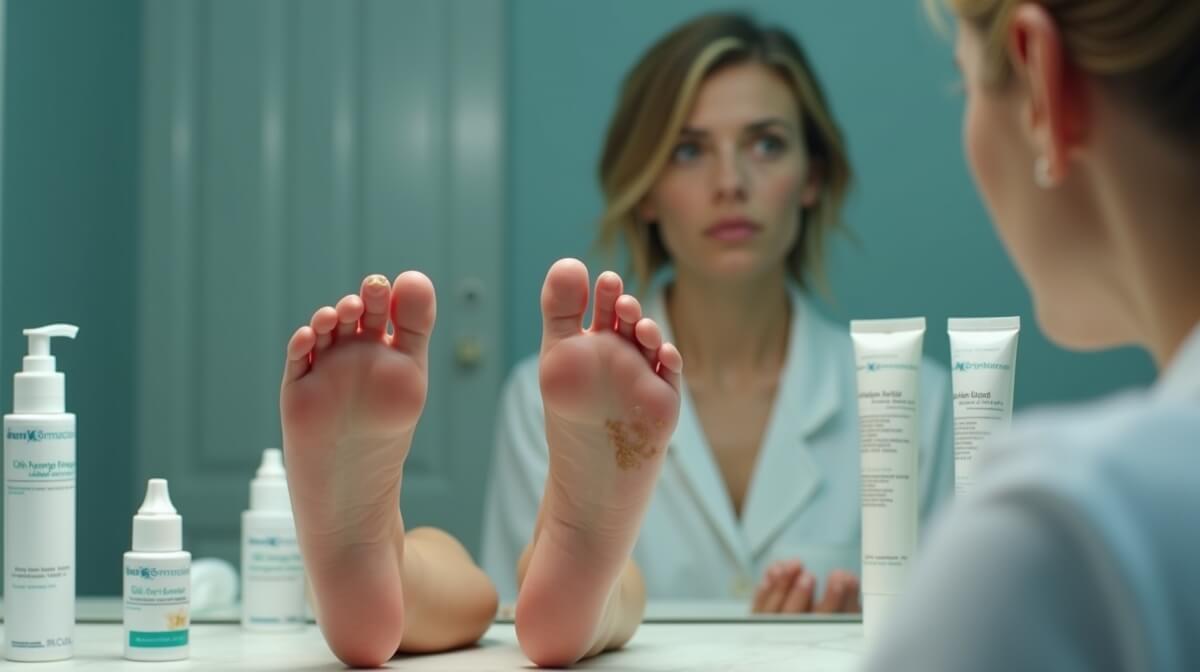
When a regimen stalls, don’t lose hope. You have multiple paths: confirm the diagnosis, upgrade to prescription therapy, combine modalities for better penetration, and overhaul hygiene to prevent reinfection. This is where most people finally turn the corner.
As you compare options—including prescriptions, debridement, hygiene protocols, and select supplements—see our review of a deeper-acting approach that discusses root-cause factors. Use reviews alongside clinical guidance to decide what fits your situation and risk profile.
Medical-grade treatments and prescription antifungals explained
Prescription topicals (e.g., efinaconazole, tavaborole, ciclopirox for nails; ketoconazole, econazole for skin) offer higher potency or superior penetration. They require consistent use—daily for months for nails, typically 2–6 weeks for skin. Combining with nail debridement improves success by reducing thickness.
Oral antifungals (terbinafine, itraconazole, fluconazole) reach the nail bed via the bloodstream, bypassing the penetration problem. Typical toenail courses range from 6–12 weeks for terbinafine and pulse regimens for itraconazole, with full nail regrowth over 6–12 months. Your clinician will check for drug interactions and, in some cases, liver function before and during therapy.
Procedural options include laser therapy and medical debridement. Lasers may improve appearance and fungal load, though outcomes vary. Many patients do best with a multi-pronged plan—oral or potent topical + debridement + shoe and surface disinfection.
To help you compare modalities objectively, review this snapshot.
| Modality | Reach/Penetration | Typical Duration | Pros | Considerations |
|---|---|---|---|---|
| Prescription topical | Better surface and nail-plate penetration | 4–12 weeks (skin); 6–12 months (nails) | Targeted, fewer systemic effects | Adherence critical; cost varies |
| Oral antifungal | Bloodstream delivery to nail bed | 6–12 weeks (toenails) | Higher cure rates for nails | Drug interactions; labs may be needed |
| Laser/debridement | Mechanical/thermal reduction of fungal burden | Sessions per clinician plan | Adjunct to meds; cosmetic benefits | Out-of-pocket costs; variable efficacy |
Note that “OTC fungus cream vs prescription” isn’t a simple strength contest. It’s about matching the drug and delivery to the infection’s location and depth—and your health profile.
Importance of professional diagnosis for effective treatment
Because “Can improper diagnosis cause fungus treatments to fail?” is a common question, the short answer is yes. A clinician can distinguish fungus from mimics and identify mixed infections (e.g., fungal + bacterial) that require combined therapy. This prevents steroid misuse, a common reason for worsening rashes.
Diagnostic tools include KOH microscopy for fast office-based confirmation, culture for species identification, and PCR in select cases. For nails, a proper clipping from the affected area—not debris alone—improves accuracy. Diagnosis also informs the value of oral vs topical choices and expected timelines.
Bring photos and your treatment log. Details about which agents you used, for how long, and what changed will help your clinician build a targeted, efficient plan.
Home care tips and best hygiene practices for faster recovery
Hygiene and environment can make or break your results. Even the effective treatment for chronic athlete’s foot fails if shoes, floors, and towels re-seed fungus daily. Build a routine you can sustain for at least 4–6 weeks while treating, then maintain weekly thereafter.
Consider this evidence-aligned hygiene set:
- Change socks twice daily; choose moisture-wicking fabrics.
- Alternate shoes daily; allow 24 hours to dry with liners removed.
- Use a UV or antifungal shoe sanitizer 2–3 times per week.
- Disinfect showers and bathroom floors weekly with antifungal cleaners.
- Keep feet dry at work and the gym; flip-flops in communal areas.
- Separate towels; launder in hot water, dry on high heat.
If you’re weighing “compare OTC and natural remedies for fungus,” remember that tea tree oil or vinegar soaks may soothe but rarely cure established infections alone. Use them only as adjuncts to evidence-based therapy.
Preventing Future Fungal Infections: Long-term Solutions & Lifestyle Changes
Prevention is the final lever for lasting results. Once you clear an infection, spore control and skin-barrier care keep you clear. This matters for active adults, parents, and anyone frequently in gyms, pools, or locker rooms.
Think of prevention as “environmental hygiene + skin strategy + health maintenance.” Each component addresses a major relapse pathway.
Daily foot and skin care to minimize recurring infections
Skin thrives when it’s clean, dry, and intact. After showering, fully dry between toes and skin folds. Consider a daily antifungal powder if you sweat heavily. Moisturize dry, cracked areas with urea or lactic acid creams to restore the barrier without creating excess moisture.
For those aiming at the “best cure for stubborn foot fungus,” combine barrier repair with targeted therapy and consistent drying practices. If you have athlete’s foot, treat both feet even if one looks normal; spores travel quickly.
If you’re seeking “fungus cream not working solutions,” verify technique, extend treatment, and add moisture management. Skin comfort improves quickly, but durability comes from consistency.
Environmental and footwear hygiene practices
Fungi linger in dark, moist shoes and carpets. Rotate footwear and use removable insoles so sweat can evaporate. A UV sanitizer or antifungal spray disrupts spores. Gym bags and yoga mats deserve periodic cleaning too.
In practical terms, aim for a “48-hour dry cycle” per shoe pair. Two pairs used on alternating days cut in-shoe humidity by roughly 30–40%, based on moisture-evaporation data. That simple habit slashes reinfection risk.
Families should treat floors like a shared ecosystem. Clean bathroom surfaces weekly, avoid sharing nail tools, and store shower sandals near the door for habitual use.
Monitoring chronic health conditions that can increase susceptibility
Conditions like diabetes, hypothyroidism, and vascular disease reduce skin resilience and slow healing. If you have diabetes, check feet daily, moisturize appropriately, and address calluses with professional care. Small cracks can become portals for both fungi and bacteria.
Medications that suppress the immune system also change the calculus—your threshold for escalation should be lower. Discuss antifungal choices with your clinician to avoid drug interactions, especially if considering oral therapy.
Finally, nutrition, sleep, and stress management indirectly support skin defense. While no diet “cures” fungus, meeting protein and micronutrient needs helps barrier repair during treatment.
Frequently Asked Questions About OTC Fungus Cream Failures
Why don’t standard OTC antifungal creams always cure fungal infections?
OTC products can fail due to inadequate potency, poor penetration through thick skin or nails, application mistakes, misdiagnosis, fungal biofilms, and unaddressed health factors such as diabetes or heavy sweating. Many people stop too soon when symptoms improve but before the fungus is eliminated, leading to relapse. If there’s no improvement after 2–4 weeks for skin infections, reassess diagnosis and treatment, and consider escalation for nails that rarely respond to OTC therapy alone.
What are the most common mistakes people make using over-the-counter fungus creams?
Frequent errors include applying only to visible rash, not extending 1–2 inches beyond the edges, skipping applications, stopping as soon as itching calms, and failing to continue for 1–2 weeks after symptom resolution. Others forget to disinfect shoes and floors or to keep feet dry. These mistakes allow fungal reservoirs to persist and re-seed the area, creating the appearance that the product “doesn’t work” when adherence is the real issue.
How do I know if my fungal infection needs prescription treatment?
Consider prescriptions if there’s no improvement after 2–4 weeks of correct OTC use for skin infections, or from the outset for multi-nail involvement, painful nails, or moccasin-type athlete’s foot. Worsening redness, swelling, discharge, or fever suggests bacterial involvement and requires prompt medical care. A clinician can confirm fungus via KOH exam or culture and advise whether topical or oral prescriptions are more appropriate for your specific case.
Can an OTC cream make fungal infection worse if used incorrectly?
While antifungals themselves typically don’t worsen fungus, incorrect use can prolong infection. The bigger risk is misdiagnosis and adding topical steroids to a fungal rash, which can suppress local immunity and allow fungi to spread (tinea incognito). Another risk is skin maceration from over-occlusion. If a rash expands or symptoms intensify despite correct use, stop and seek evaluation to ensure the diagnosis and regimen are appropriate.
How long should I use over-the-counter fungus creams before seeing results?
For skin infections, expect itch and burn relief within 2–4 days and visible improvement within 7–14 days. Full clearance typically occurs by 2–4 weeks with consistent use. Nails take far longer due to slow growth—often 6–12 months for full regrowth with professional therapy. If you see no change at all by day 14 on skin, reassess ingredient choice, technique, and hygiene, or consider a medical evaluation.
What are signs that an over-the-counter antifungal treatment isn’t working?
Warning signs include expanding rash, persistent itch or burning after two weeks, spread to new areas, increasing nail thickening or discoloration, foul odor, fissures, pain, or signs of bacterial infection like warmth and swelling. If your weekly photos show no improvement after 2–4 weeks for skin disease, it’s time to switch strategies: confirm diagnosis, change class or strength, and upgrade hygiene and environment control.
What should I do if a fungus cream has failed to clear my infection?
First, confirm the diagnosis through a clinician—don’t guess. Then consider upgrading to a prescription topical or oral antifungal, especially for nails or extensive skin disease. Combine therapy with nail debridement and strict hygiene: dry feet, rotate shoes, sanitize footwear, and disinfect floors. Adhere to treatment for the full recommended duration and photograph progress weekly to ensure you’re on track and to inform any necessary adjustments.
How do underlying health issues affect the effectiveness of OTC fungus creams?
Diabetes, vascular disease, obesity, hyperhidrosis, and immunosuppression increase susceptibility and slow healing, making standard OTC regimens less effective. These conditions create a friendlier environment for fungi and impair the skin barrier. To overcome this, pair antifungal therapy with tight moisture control, footwear hygiene, and management of the underlying condition—especially glucose control in diabetes—to improve clearance and reduce recurrence rates.
Are there stronger alternatives to standard over-the-counter treatments?
Yes. Prescription-strength topicals (e.g., efinaconazole, ciclopirox) and oral antifungals (terbinafine, itraconazole) offer greater potency and penetration, particularly for nails and stubborn skin infections. Procedural options like medical debridement and, in select cases, laser therapy can complement medications. Choosing among them depends on infection location, severity, health status, and goals; a clinician can tailor the plan for the most efficient route to clearance.
Can I combine home remedies with over-the-counter fungus creams for better results?
Some home measures—like meticulous drying, antifungal powders, and vinegar or dilute bleach foot soaks—can help reduce fungal load and moisture, serving as adjuncts. However, essential oils and DIY approaches rarely cure established infections alone. Use them to support evidence-based therapy, not replace it. If you see no improvement after 2–4 weeks, escalate to diagnosis confirmation and consider a prescription-directed plan.
When is it necessary to see a doctor for a fungal infection?
See a doctor if the rash spreads or worsens after 2–4 weeks of correct OTC use, if there’s pain, drainage, fever, or if you have diabetes, poor circulation, or are immunosuppressed. For nail fungus involving multiple nails, a painful nail, or cosmetic concerns with deadlines (e.g., upcoming events), professional guidance early on is wise. A clinician will confirm the organism and build a targeted plan.
How can I prevent future fungal infections after treatment?
Prevention hinges on moisture control and environmental hygiene. Dry thoroughly after bathing, change socks twice daily if you sweat, rotate shoes to allow 24-hour drying, sanitize footwear, and clean floors and showers weekly. Avoid sharing nail tools or towels. Use flip-flops in communal areas. Address chronic conditions that increase susceptibility. These steps, maintained weekly, significantly reduce reinfection risk.
Conclusion
OTC antifungals help many mild skin infections, but persistent cases often require a smarter, layered plan. The most common reasons for failure—insufficient potency, application gaps, misdiagnosis, biofilms, and unaddressed health factors—are solvable with diagnosis confirmation, upgraded therapy, and disciplined hygiene. Track progress, set reminders, and treat your environment as part of the plan.
If you’re still dealing with an otc fungus treatment not working, don’t keep repeating the same steps. Escalate thoughtfully: consider prescriptions, nail debridement, shoe disinfection, and longer durations aligned with real fungal growth cycles. For deeper insight into approaches that address penetration and persistent colonies, read our balanced review that focuses on root-cause mechanisms.
- Confirm the organism before changing therapies.
- Match drug and delivery to infection depth and location.
- Use a strict application protocol and continue beyond symptom relief.
- Control moisture and sanitize footwear and floors.
- Escalate early for nails, severe rashes, or high-risk health conditions.
Found this helpful? Share your experience, ask questions, and pass this guide along to anyone struggling with recurring athlete’s foot or nail fungus. → Click here to read our analysis of a solution that addresses the “root cause.”
Important Health Notice and Disclaimer: This content is informational and does not replace professional medical advice, diagnosis, or treatment. Fungal infections can mimic or coexist with other conditions. If symptoms worsen, spread, or involve pain, drainage, fever, diabetes, vascular disease, or immunosuppression, seek prompt medical care. Always review medication interactions and precautions with a licensed clinician before starting prescription antifungals or combining therapies.







Add comment