
 Dr. Lauren Hayes
Last updated: November 12, 2025
If you are over 45 and noticing a weak urine stream men often face, you are not alone. Slower flow, starting and stopping, or feeling like you never fully empty can chip away at sleep, work, and confidence. Many men worry it means cancer or that a catheter is coming, but most cases have fixable, non-cancer causes with step-by-step solutions.
This guide builds a clear bridge from symptoms to action. We translate medical terms into plain English, show when a weak stream is urgent, and map out tests and treatments commonly used in the U.S. You will find options that balance effectiveness, sexual side effects, downtime, and cost—so you can choose confidently.
We also separate rumor from reality. Not every slow flow is an enlarged prostate, and not every enlarged prostate needs surgery. With early evaluation, many men sleep through the night again, avoid retention, and protect bladder and kidney health.
Key takeaways
- Most weak streams after 45 are caused by benign prostatic hyperplasia (BPH), not cancer.
- Self-checks, IPSS scoring, and simple tests like uroflowmetry and post-void residual guide next steps.
- Effective options range from watchful waiting and meds to minimally invasive procedures that preserve sexual function.
- Certain medications, dehydration, caffeine, and pelvic floor dysfunction can make flow worse—and are fixable.
- Red flags like fever, inability to urinate, or kidney symptoms require urgent care.
Keep reading to learn practical steps you can take today, when to see a urologist, and how to choose the best treatment for your situation—without hype or guesswork.
What a weak urine stream means in men over 45
A weak urine stream simply describes reduced force and speed of urination. In men over 45, it often reflects changes in the prostate, bladder muscle, pelvic floor, or nerve signaling. The key is distinguishing normal aging from conditions that can damage the bladder or kidneys if untreated.
Doctors call these symptoms lower urinary tract symptoms (LUTS). Though common, they are not trivial. Left unchecked, chronic incomplete emptying can stretch the bladder, trigger infections, and raise the risk of sudden urinary retention.
Common symptoms that accompany a slow urine flow
Men usually notice hesitancy at the start of urination, a thin or dribbling stream, and longer bathroom time. Many feel they have to push or strain to get started. It can be easy to dismiss at first, especially if it varies day to day.
Nocturia—waking one to three times a night to urinate—often goes hand in hand with a weak stream. Daytime urgency, frequent trips to the restroom, and a sense of incomplete emptying are also common. These symptoms tend to cluster and may worsen with dehydration or alcohol.
Leaking after finishing can cause embarrassment or the need for tissue in underwear. Some men also report burning, pelvic pressure, or lower abdominal discomfort if the bladder is overfull. Tracking these details helps your clinician identify the cause faster.
Using the International Prostate Symptom Score (IPSS) can quantify severity. Mild symptoms score 0–7, moderate 8–19, and severe 20–35. This number guides whether to watch, medicate, or consider procedures.
How aging and the prostate affect urine flow
As men age, the prostate commonly grows around the urethra, narrowing the channel. Even small increases in tissue can make a big difference in flow, like squeezing a garden hose. Inflammation, hormonal shifts, and genetic factors contribute to this gradual change.
Another underappreciated factor is pelvic and prostatic circulation. With age, nitric oxide signaling and microvascular blood flow can decline, reducing smooth muscle relaxation in the prostate and bladder neck. Some men explore lifestyle strategies and circulation-supportive approaches—such as targeted exercise, diet, and supplements like ProstAfense—that aim to support nitric oxide and blood flow.
Bladder muscle (detrusor) function also evolves. Years of pushing against resistance can fatigue or thicken the muscle, leading to weaker contractions. When the bladder becomes overworked, emptying can slow, and post-void residual increases.
Finally, stress and pelvic floor dysfunction can paradoxically tighten the area around the urethra. Instead of relaxing to let urine flow, an overactive pelvic floor can clamp down at the wrong time, worsening hesitancy.
Is a weak urine stream a sign of prostate cancer?
Most weak streams in men over 45 are caused by benign prostatic hyperplasia (BPH), not prostate cancer. BPH is non-cancerous tissue growth and may cause urinary frequency, urgency, and a slow stream. Prostate cancer usually has no urinary symptoms in early stages.
That said, some advanced cancers can compress the urethra. Risk assessment relies on age, family history, race, PSA trends, and exam findings—not symptoms alone. Think of a weak stream as a prompt to get checked, not a cause for panic.
PSA testing and a digital rectal exam (DRE) help differentiate BPH from cancer risk. If PSA is elevated or rises quickly over time, your clinician may repeat testing, check prostate volume, or discuss imaging and biopsy based on guideline criteria.
Early detection balances benefits and overdiagnosis. Decisions are individualized. A calm, stepwise evaluation usually answers whether you are dealing with BPH, inflammation, or another cause entirely.
When a weak stream is an emergency: red flags
Certain symptoms demand urgent care. Inability to urinate despite a full, painful bladder suggests acute urinary retention. This can damage the bladder and kidneys if not relieved quickly in the ER or urgent care.
Fever, chills, flank pain, and burning urination can signal infection spreading to the kidneys or bloodstream, particularly in older adults. Large clots in the urine, severe blood in urine, or painful swelling of the lower abdomen also warrant immediate attention.
If you have known kidney disease, single kidney, or are on immunosuppressive medications, do not delay. Sudden severe back or side pain with nausea may indicate a stone or obstruction. Rapid evaluation can prevent complications and shorten recovery.
Neurological red flags include new leg weakness, numbness in the saddle area, or difficulty controlling bowel function. These rare situations require emergency assessment to rule out spinal cord compression or severe nerve injury.
The 5 common causes of a weak urine stream after 45
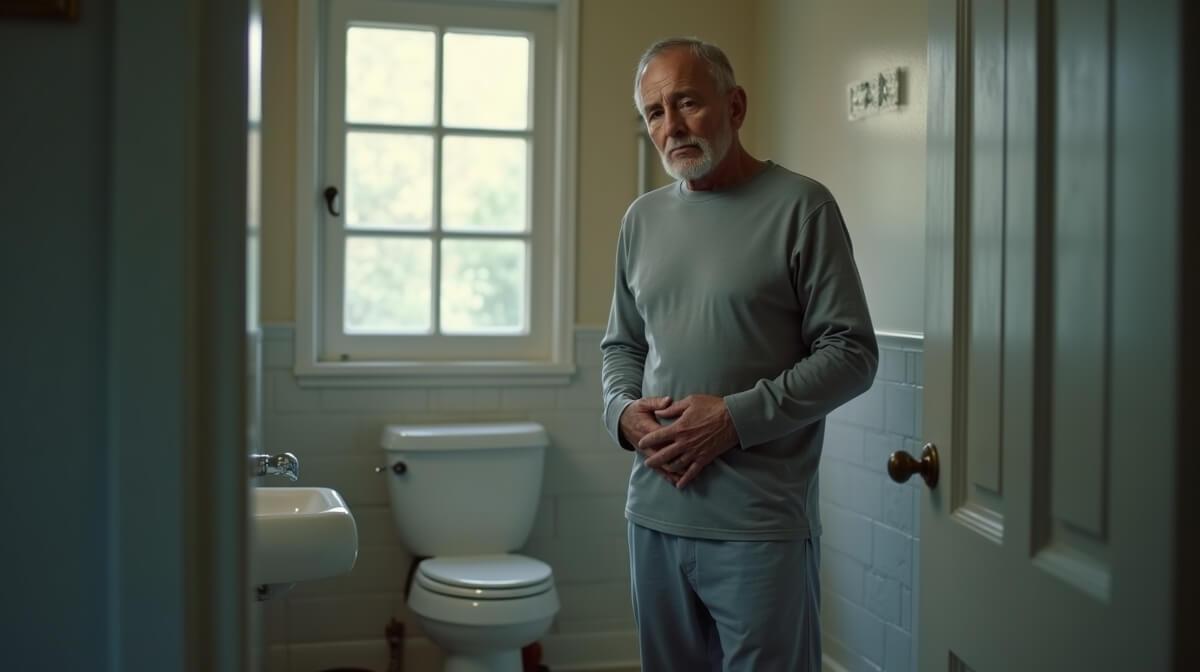
These five conditions explain most slow urine flow in midlife and beyond. They can overlap, so professional evaluation matters. The good news: each has a clear diagnostic path and treatment menu ranging from conservative to surgical.
As you read, note which description sounds most like your situation. A brief symptom journal can help your clinician move faster to the right fix—often in the first visit.
Benign prostatic hyperplasia (BPH) narrows the urethra
BPH is the leading cause of slow flow in men over 45. As the transition zone of the prostate enlarges, it squeezes the urethra and distorts the bladder outlet. The result is hesitancy, a weak stream, urgency, and often nocturia.
Severity varies widely. Some men with large prostates have mild symptoms, while others with average-sized glands struggle due to tight bladder neck or sensitive bladder. The IPSS and objective tests like uroflowmetry and post-void residual guide treatment intensity.
Left untreated, obstructive BPH can strain the bladder and lead to infections or retention. Early management—whether lifestyle adjustments, medications, or minimally invasive procedures—can protect bladder function and reduce nighttime awakenings.
Importantly, BPH is not cancer. However, BPH and prostate cancer can coexist. PSA and DRE help sort things out and ensure nothing is missed.
Prostatitis or urinary infections cause swelling and weak flow
Infections and inflammation can temporarily narrow the urethra and irritate the bladder. Prostatitis may present with pelvic or perineal pain, burning urination, painful ejaculation, and a fluctuating stream. Acute bacterial cases can cause fever and systemic symptoms.
Urinalysis and cultures clarify whether infection is present. Sometimes tests are negative, yet inflammation persists. In these cases, clinicians may consider chronic pelvic pain/prostatitis and explore alpha-blockers, anti-inflammatories, or pelvic floor therapy.
Most infections respond to targeted antibiotics. For chronic or recurrent symptoms, addressing bladder habits, sexual health, and stress can reduce flare frequency. A weak stream usually improves as inflammation settles.
If you develop urinary retention during infection, prompt drainage is essential. Never delay care if you have fever, chills, or feel acutely ill.
Urethral strictures from scar tissue block urine
A urethral stricture is a narrowed segment caused by scar tissue. Triggers include prior instrumentation, trauma (like a bicycle straddle injury), inflammation, or unknown causes. Flow can be thin or spray-like, and infections may be recurrent.
Clues include a slow stream that began after a procedure, increasing effort to void, or recurrent UTIs. Some men notice that pushing makes flow no better, unlike BPH where strain sometimes helps a little.
Diagnosis often involves uroflowmetry, cystoscopy, and imaging such as retrograde urethrogram. Small strictures may respond to dilation or urethrotomy, while longer ones often require urethroplasty for durable results.
Ignoring strictures risks worsening scarring and bladder damage. Early referral to a urologist who treats strictures improves outcomes.
Bladder muscle weakness or nerve problems slow flow
When the bladder muscle cannot contract effectively, urination is slow and incomplete. Diabetes, spinal disease, Parkinson’s, multiple sclerosis, and prior pelvic surgeries can affect bladder nerves. This is called underactive bladder or detrusor underactivity.
Symptoms include a weak stream, long time to empty, and high post-void residual even without much obstruction. Some men strain belly muscles to compensate, which can worsen hemorrhoids or hernias without improving bladder contraction.
Urodynamic testing measures bladder pressures to confirm the diagnosis. Treatment can include timed voiding, double voiding, intermittent catheterization, and addressing underlying nerve or glucose issues. Certain meds may be adjusted to reduce anticholinergic load.
In select cases, sacral neuromodulation supports bladder emptying. Realistic goals focus on protecting kidneys, preventing infections, and improving quality of life.
Medications and lifestyle factors can reduce urine stream
Several common medications tighten the bladder outlet or weaken bladder contraction. Decongestants like pseudoephedrine increase urethral tone, while antihistamines and tricyclic antidepressants reduce bladder contractility. Opioids, antipsychotics, and some antispasmodics can also slow flow.
Beyond meds, dehydration makes urine more concentrated and irritates the bladder. Caffeine and alcohol increase urine production and urgency but can paradoxically lead to incomplete emptying. Heavy evening fluids may worsen nighttime symptoms disproportionately.
Constipation and pelvic floor tension are silent contributors. A full rectum can mechanically press on the bladder outlet, while chronic clenching makes it harder to relax and void. Fixing bowel patterns and learning pelvic floor relaxation can make a noticeable difference.
Sleep apnea deserves attention; untreated apnea increases nighttime urine production through hormonal changes. Addressing apnea often reduces nocturia and improves overall urinary control.
How doctors diagnose a weak urine stream in the U.S.
Diagnosis starts with a conversation and simple in-office tests. The goals are to confirm whether obstruction, bladder weakness, inflammation, or medication effects are driving your symptoms and to prioritize safe, effective treatments.
Think of the process as building a map: history narrows the neighborhood, IPSS grades severity, screening tests pick the street, and targeted imaging pinpoints the house.
History, symptom scores (IPSS), and physical exam
Your clinician will ask how long symptoms have been present and which ones dominate—weak stream, urgency, frequency, nocturia, or pelvic pain. They will explore hydration, caffeine, alcohol, constipation, and sleep patterns, plus comorbidities like diabetes or sleep apnea.
Standardized tools like the IPSS score the last month of symptoms and how bothersome they are. This creates a baseline and helps track progress. A brief bladder diary can capture real-life patterns missed in a single visit.
A focused physical exam includes abdominal palpation and a digital rectal exam to estimate prostate size and check for nodules or tenderness. Neurologic and pelvic floor assessments may be added if nerve or muscle dysfunction is suspected.
Medication review is critical. Decongestants, antihistamines, opioids, and certain antidepressants commonly contribute. Adjusting them early can change the trajectory before more invasive steps are considered.
Key tests: urinalysis, PSA, uroflowmetry, post-void residual
Urinalysis screens for infection, blood, or sugar. If infection is suspected, a culture identifies the organism. Blood in urine may prompt imaging to rule out stones or other causes.
PSA helps assess prostate cancer risk in context. PSA rises with BPH, prostatitis, and cancer, so trends over time matter. Discussion about the pros and cons of PSA screening takes your age, risk factors, and preferences into account.
Uroflowmetry measures urine speed. In general, a maximum flow (Qmax) above 15 mL/s is reassuring; under 10 mL/s suggests obstruction or poor bladder contraction. The curve shape and voided volume add clues.
Post-void residual (PVR) checks how much urine remains after voiding using ultrasound. Less than 50 mL is common; over 200 mL is concerning. High residuals point toward obstruction or detrusor weakness and guide urgency of treatment.
| Test | What it shows | Typical threshold | Next step if abnormal |
|---|---|---|---|
| Urinalysis/culture | Infection, blood, glucose | Positive nitrites/WBCs | Antibiotics, further imaging if blood persists |
| PSA | Prostate risk context | Rising trend or high for age | Repeat PSA, consider imaging/biopsy discussion |
| Uroflowmetry | Flow strength (Qmax) | Qmax < 10 mL/s | Assess obstruction vs bladder weakness |
| PVR ultrasound | Emptying efficiency | PVR > 200 mL | Consider catheterization, meds, or procedure |
Objective numbers help remove guesswork. They also track improvement after starting medication or completing a procedure. Seeing a Qmax rise from 8 mL/s to 18 mL/s is a concrete sign of success.
When combined with your IPSS score, these tests create a balanced picture. You and your clinician can then weigh benefits and trade-offs of the available options with confidence.
Imaging and cystoscopy: when are they needed?
Ultrasound assesses kidney health, bladder wall thickness, and prostate size without radiation. If blood in urine persists, a CT urogram may be used to evaluate stones or masses. Imaging choice depends on your risk profile and symptoms.
Cystoscopy involves a tiny camera to look inside the urethra and bladder. It is particularly helpful if a stricture is suspected, if blood in urine is unexplained, or before selecting a procedure. It is usually brief, with local anesthetic gel and minimal downtime.
Men with recurrent infections, retention, or high residuals may also undergo urodynamics to measure bladder pressures. This is key when weak detrusor function is suspected so that therapy targets the actual problem.
Insurance coverage in the U.S. typically includes these evaluations when medically indicated. Prior authorization may be needed for advanced imaging; your clinic can guide the process and expected out-of-pocket costs.
“The right test at the right time avoids both over-treatment and delayed care.”
– Urology guideline consensus, American Urological Association
Evidence-based treatments to improve urine flow

The best treatment is the one that fits your symptom severity, anatomy, medical history, and goals. Many men improve without surgery. When procedures are appropriate, modern options can boost flow while preserving sexual function and minimizing downtime.
Use the sections below to compare effectiveness, side effects, and recovery time in a practical, apples-to-apples way.
Watchful waiting and self-care for mild symptoms
For mild IPSS scores (0–7) and little bother, watchful waiting is reasonable. The strategy includes timed voiding, double voiding, and smart fluid timing to reduce nighttime trips. Avoiding constipation and practicing pelvic floor relaxation reduce outlet resistance.
Cutting back on evening fluids by 2–3 hours before bed, limiting caffeine after noon, and moderating alcohol can make a visible difference within a week. Track your IPSS monthly to spot trends—improvement encourages consistency, while worsening prompts a check-in.
Some men explore evidence-informed lifestyle and circulation support to promote smooth muscle relaxation. If you are curious about approaches built around nitric oxide and blood flow, you can read our review of ProstAfense and discuss any supplement choice with your clinician, especially if you take blood pressure meds or anticoagulants.
Watchful waiting is not passive. It is a structured plan with checkpoints. If you develop red flags or your IPSS crosses into moderate or severe ranges, it is time to escalate.
Alpha-blockers, 5-ARIs, and daily tadalafil for BPH
Alpha-blockers (e.g., tamsulosin, alfuzosin, silodosin) relax the prostate and bladder neck within days. They improve flow and reduce urgency. Common side effects include dizziness, low blood pressure, and ejaculatory changes; tamsulosin and silodosin have higher rates of retrograde ejaculation.
5-alpha-reductase inhibitors (5-ARIs) like finasteride and dutasteride shrink the prostate by 20–30% over 6–12 months, best for larger prostates. Side effects may include decreased libido and erectile changes in a minority of men. Combining an alpha-blocker with a 5-ARI benefits moderate-to-severe BPH.
Tadalafil 5 mg daily can improve both erectile function and BPH symptoms. It works by enhancing smooth muscle relaxation. Avoid it if you use nitrates; discuss with your cardiologist if you have complex heart disease.
Medication choices balance speed and durability. Alpha-blockers act fast; 5-ARIs prevent progression. Many men start with an alpha-blocker and add or switch based on symptom trajectory and side effects.
Antibiotics and anti-inflammatories for prostatitis
Acute bacterial prostatitis requires prompt antibiotics guided by culture, often for 2–4 weeks. Severe cases may need a brief hospitalization. During treatment, hydration and bladder drainage strategies protect the urinary tract.
Chronic bacterial prostatitis uses longer courses (4–6 weeks) with periodic reassessment. For chronic pelvic pain/prostatitis without infection, options include anti-inflammatories, alpha-blockers, pelvic floor therapy, and stress management.
Symptoms often wax and wane. Building a personalized plan with triggers, flare strategies, and maintenance habits prevents frustration. Most men see meaningful improvement with a multimodal approach.
Reassess if symptoms persist or worsen. Sometimes another diagnosis—like a stricture or bladder dysfunction—is hiding in the background and requires targeted therapy.
Treating strictures: dilation, urethrotomy, urethroplasty
Short strictures may be treated with dilation or internal urethrotomy, which can quickly improve flow. Recurrence rates vary by length and location. Your urologist will discuss the likelihood of needing repeat procedures.
Longer or recurrent strictures often benefit from urethroplasty, a reconstructive surgery with high long-term success. While the recovery is longer than endoscopic approaches, the durability is superior for many men.
Catheter-based strategies may be used temporarily to rest the urethra or manage retention. Decision-making weighs the impact on daily life, sexual function, and durability of results.
Early referral to a urologist familiar with stricture surgery ensures you see the full menu of options, not just stop-gaps.
Minimally invasive BPH options: UroLift, Rezūm, iTind
When medication is not enough or side effects limit use, minimally invasive therapies can restore flow with low downtime. UroLift uses implants to hold open the prostate without cutting tissue and typically preserves ejaculation.
Rezūm uses water vapor (steam) to ablate excess tissue. Symptoms improve over weeks as tissue resorbs. Ejaculation is often preserved, though temporary irritative symptoms can occur as the prostate heals.
iTind is a temporary nitinol device that reshapes the prostatic urethra over several days, then is removed. It improves flow while aiming to minimize sexual side effects and recovery time.
Coverage and costs vary by insurance, but these options are commonly covered when medically indicated. If you are comparing UroLift vs Rezūm, discuss prostate size, median lobe anatomy, and your priority to preserve ejaculation.
Pelvic floor therapy and bladder training strategies
Not all weak streams require more force; many require better timing. Pelvic floor physical therapists teach relaxation and coordination so the urethral sphincter opens when the bladder contracts. This is crucial for men with pelvic floor dysfunction.
Techniques include diaphragmatic breathing, biofeedback, and down-training to stop clenching. Overdoing Kegels without guidance can backfire by tightening an already tight outlet. A tailored program addresses your specific patterns.
Bladder training extends intervals between voids gradually, reducing urgency and frequency. Timed voiding combined with double voiding improves emptying without straining. Within a few weeks, many men notice steadier flow and fewer nighttime trips.
Therapy complements medical or procedural treatments. Even after UroLift or Rezūm, better coordination can lock in gains and prevent recurrence of bad habits.
Medication review: drugs that can worsen urine flow
Review your medicines with your clinician. Stopping a trigger or switching to a bladder-friendly alternative can be as effective as starting a new BPH drug. Never change prescriptions without medical guidance.
Common culprits and considerations include these categories; the goal is to reduce outlet tightness and anticholinergic burden while preserving symptom control for other conditions.
- Oral decongestants (pseudoephedrine, phenylephrine) tighten the prostate/bladder neck.
- First-generation antihistamines (diphenhydramine, chlorpheniramine) reduce bladder contraction.
- Tricyclic antidepressants (amitriptyline, nortriptyline) have strong anticholinergic effects.
- Antipsychotics (olanzapine, quetiapine) may impair bladder function.
- Antispasmodics/anticholinergics for overactive bladder can worsen emptying if obstruction exists.
- Opioids slow bladder activity and can precipitate retention.
- Muscle relaxants (cyclobenzaprine) and benzodiazepines may reduce coordination.
Even supplements can interact. Discuss all over-the-counter products with your clinician, especially those affecting blood pressure or sedation. A small tweak can yield a big improvement in flow.
“In many men, the simplest fix is in the medication list, not the operating room.”
– Board-certified urologist, clinical practice insight
Daily habits that help a weak urine stream after 45
Habits create the backdrop for urinary health. The following strategies target timing, triggers, and metabolic factors that quietly worsen flow. Small, consistent changes often deliver more restful nights and smoother days.
Start with what you can do this week, then build. Track your IPSS and a simple bladder diary to reinforce what works.
Timed voiding, double voiding, and fluid timing tips
Timed voiding means visiting the restroom on a schedule rather than waiting for urgency. Begin with every two to three hours during the day. This prevents overfilling and reduces straining when you finally go.
Double voiding means waiting 30–60 seconds after finishing, then trying again. Lean forward slightly or stand if you were seated. This can drain an extra 50–100 mL, lowering residual volume and urgency.
Shift most fluids to earlier in the day. Reduce intake two to three hours before bed, and empty fully right before sleep. If you wake at night, try a single calm void without turning on bright lights that reset wakefulness.
Aim for pale-yellow urine most of the day. If it is consistently dark, you are likely underhydrated. Balance is key—avoid both dehydration and late-evening overload.
Caffeine, alcohol, and decongestants: what to limit
Caffeine increases urine production and bladder sensitivity. Target no more than 200–300 mg daily, and avoid it after noon if nocturia is a problem. Remember hidden sources like pre-workout powders, energy drinks, and dark chocolate.
Alcohol, especially beer and spirits, promotes diuresis and nocturia. Set a limit of one drink on evenings before early commitments or sleep-sensitive nights. Hydrate earlier in the day to reduce evening thirst that drives late drinking.
During cold and allergy seasons, choose decongestant-free options if your stream is weak. Saline rinses, humidifiers, and non-sedating antihistamines with lower anticholinergic effects can help. Ask your pharmacist for guidance that fits your conditions.
These small adjustments reduce bladder irritants and outlet resistance. Many men notice improvements within a week of consistent changes.
Weight, exercise, and metabolic health impact urine flow
Excess weight increases abdominal pressure and inflammation, aggravating LUTS. Losing 5–10% of body weight can reduce nocturia and improve flow. Combine resistance training with brisk walking for metabolic and vascular benefits.
Good glucose control protects bladder nerves. If you have diabetes, aim for steady blood sugars and address neuropathy early. Sleep apnea treatment also reduces nighttime urine production and improves daytime energy.
Exercise increases nitric oxide availability and pelvic circulation, supporting smooth muscle relaxation. A routine of 150 minutes of moderate activity weekly plus two strength sessions is a realistic starting point for most men.
Do not underestimate core and hip mobility. Reducing hip flexor tightness and pelvic floor overactivity promotes easier, more coordinated voiding.
Does drinking more water help or make it worse?
Both extremes cause trouble. Too little water concentrates urine and irritates the bladder, driving urgency. Too much, especially at night, overwhelms storage and disrupts sleep. The target is balanced hydration aligned with your day.
A practical approach is 6–8 cups spread from morning to late afternoon, tapering in the evening. Adjust for exercise, heat, and medications like diuretics. Use urine color as feedback—aim for light yellow by day and avoid heavy fluids two hours before bed.
If you often forget to drink until evening, set reminders earlier in the day. Pair hydration with meals and midafternoon breaks so nighttime is naturally quieter. Consistency makes the biggest difference.
Men with high PVRs or underactive bladder should avoid chugging large volumes. Gentle, steady intake reduces pressure on a bladder that empties slowly.
When to see a urologist and what to expect

Primary care is a great starting point, but a urologist provides specialized testing and procedures when needed. Early referral avoids long stretches of poor sleep, rising residuals, and preventable ER visits.
Knowing what to expect reduces anxiety. Most evaluations are quick, minimally invasive, and covered by insurance when medically necessary.
Signs it’s time to seek specialist care
If your IPSS reaches moderate (8–19) or severe (20–35), if nocturia is more than twice nightly, or if your stream is consistently weak with straining, schedule a consult. High bother—even with a lower score—is reason enough.
Red flags like urinary retention, recurrent infections, blood in urine, or kidney changes demand prompt referral. Likewise, if medications fail or side effects are unacceptable, exploring minimally invasive options is reasonable.
Men with diabetes, neurologic disease, or prior pelvic surgeries benefit from earlier urodynamic assessment. Tailoring treatment to nerve and muscle function prevents ineffective therapies.
Finally, if you are searching for a “urologist near me weak urine stream,” prioritize clinics that offer uroflowmetry, PVR, and access to UroLift, Rezūm, and laser options so you can compare in one place.
Preparing for your visit: questions and records
A little preparation makes the appointment efficient and productive. Bring a list of symptoms, timing, triggers, and your IPSS score. Note caffeine, alcohol, and evening fluid patterns for a typical week.
Gather recent lab results, PSA history, medication and supplement lists, and prior imaging or procedures. This prevents repeated tests and speeds decision-making. If you monitor blood pressure or glucose, include those logs too.
Write down priorities: sleeping through the night, avoiding sexual side effects, minimizing downtime, and insurance coverage. Clear goals guide choices and trade-offs. Ask which options preserve ejaculation and how each affects erections.
Consider these practical questions to discuss:
- What is my likely cause: BPH, infection, stricture, or bladder muscle weakness?
- Which tests today will clarify the diagnosis?
- What is the expected benefit timeline for each treatment?
- How do side effects compare, especially retrograde ejaculation risk?
- Are UroLift vs Rezūm appropriate for my anatomy and priorities?
- If needed, what are TURP vs laser outcomes for someone like me?
Insurance, referrals, and costs in the U.S.
Most employer plans, ACA marketplace plans, and Medicare cover evaluation and evidence-based treatments when medically necessary. Prior authorization may be required for certain imaging or procedures. Your clinic’s staff can help navigate approvals.
Medication copays vary; generics like tamsulosin and finasteride are often affordable. Minimally invasive procedures such as UroLift and Rezūm are commonly covered; out-of-pocket costs depend on deductibles and co-insurance. Ask for a pre-authorization and estimate based on CPT codes.
For men comparing options by cost and downtime, clinics often provide written summaries. If you are exploring Rezūm therapy cost with insurance, clarify facility fees vs professional fees and any anesthesia charges. Transparency helps you plan.
Telehealth may handle follow-ups, IPSS reviews, and medication adjustments, minimizing time off work. Confirm which visits qualify for virtual care under your plan.
Frequently Asked Questions About Weak Urine Stream in Men Over 45
Is a weak urine stream always caused by an enlarged prostate?
No. While BPH is the most common cause after 45, infections, prostatitis, urethral strictures, bladder muscle weakness, and medications also contribute. Dehydration, caffeine, alcohol, constipation, and pelvic floor dysfunction can compound the problem. A brief evaluation with history, IPSS scoring, urinalysis, and simple tests like uroflowmetry and post-void residual usually pinpoints the cause and directs the right treatment.
Can a weak urine stream be a sign of prostate cancer?
Early prostate cancer typically causes no urinary symptoms. Most weak streams are due to BPH, not cancer. However, BPH and cancer can coexist, and some advanced cancers cause obstruction. PSA tests, a digital rectal exam, and risk factors such as age, family history, and race guide next steps. Think of a weak stream as a sign to get evaluated rather than a reason to panic.
What red flag urinary symptoms require urgent medical care?
Seek urgent care for inability to urinate with pain (acute retention), fever or chills with urinary symptoms, severe flank or lower abdominal pain, large clots or heavy blood in urine, or new weakness or numbness in the legs or saddle region. Men with kidney disease, a single kidney, or on immunosuppressants should not delay. Quick evaluation prevents bladder and kidney damage.
Which medications can cause or worsen a weak urine stream in men?
Decongestants (pseudoephedrine), first-generation antihistamines (diphenhydramine), tricyclic antidepressants (amitriptyline), opioids, antipsychotics (olanzapine), antispasmodics, and some muscle relaxants can reduce bladder contractility or tighten the outlet. Review your list with your clinician before stopping anything; alternatives often exist that preserve symptom control without harming urine flow.
How do doctors test for a weak urine stream and bladder emptying?
Most evaluations start with history, IPSS scoring, a physical exam, urinalysis, and sometimes PSA. Uroflowmetry objectively measures the speed of urination, while a post-void residual ultrasound shows how much urine remains after voiding. If needed, ultrasound, cystoscopy, or urodynamics add detail. Together, these tests distinguish obstruction from bladder weakness and guide tailored treatment.
What is a normal urine flow rate for men over 45?
On uroflowmetry, a maximum flow (Qmax) above roughly 15 mL/s is common in men without significant obstruction, while values under 10 mL/s suggest obstruction or poor bladder contraction. The interpretation also considers voided volume and curve shape. Numbers are guides, not absolute rules; your symptoms and residual urine determine whether treatment is needed.
Do alpha-blockers like tamsulosin fix a weak stream permanently?
Alpha-blockers relax the prostate and bladder neck, improving flow within days. They work while you take them but do not shrink the prostate. If symptoms progress, a 5-ARI can be added to slow growth, or minimally invasive procedures can be considered for longer-lasting relief. Many men use meds for years effectively; others transition to procedures based on preferences and side effects.
Can pelvic floor exercises help a weak urine stream in men?
Yes—when targeted correctly. For men with pelvic floor overactivity, the key is learning relaxation and coordination (down-training), not just doing more Kegels. Pelvic floor physical therapists use biofeedback, breathing, and posture to ensure the sphincter relaxes when the bladder contracts. This improves hesitancy and flow, often complementing medical or procedural therapies.
Does drinking more water improve or worsen a weak urine stream?
Both extremes can worsen symptoms. Too little water concentrates urine and irritates the bladder; too much, especially late, triggers nocturia and urgency. Aim for balanced hydration earlier in the day—about 6–8 cups for many men—then taper in the evening. Use urine color as a guide: light yellow by day and minimal fluids two hours before bedtime.
How do diabetes and nerve problems affect urine flow?
Diabetes and neurologic conditions can impair the bladder’s nerves, weakening contractions and increasing post-void residual. Symptoms include slow flow, prolonged voiding, and incomplete emptying. Urodynamics confirms detrusor underactivity. Treatment focuses on timed and double voiding, protecting kidneys, possible intermittent catheterization, and optimizing glucose and neurologic care to prevent progression.
What’s the difference between BPH and a urethral stricture?
BPH is internal enlargement of the prostate compressing the urethra from within, often with urgency and nocturia. A urethral stricture is a scarred, narrowed segment, sometimes after trauma or procedures, causing a thin, spraying stream and recurrent infections. Cystoscopy and imaging distinguish them. Treatments differ: implants or steam for BPH versus dilation or urethroplasty for strictures.
Are minimally invasive BPH procedures like UroLift or Rezūm effective?
Yes, for well-selected patients. UroLift mechanically opens the urethra and typically preserves ejaculation. Rezūm ablates tissue with steam, with improvements over weeks. Both reduce IPSS and increase flow with low downtime, and many insurance plans cover them. Anatomy, prostate size, and goals like ejaculation preservation guide the choice; discuss details with your urologist.
How long should I wait before seeing a doctor for a weak urine stream?
If symptoms persist beyond a few weeks, interrupt sleep, or require straining, schedule an appointment. Red flags like fever, inability to urinate, heavy blood, or flank pain warrant urgent care. Earlier evaluation prevents bladder strain and complications and often leads to simpler treatments with fewer side effects.
Can a weak urine stream improve without surgery?
Often, yes. Many men improve with lifestyle changes, medication optimization, and pelvic floor therapy. Alpha-blockers relieve obstruction quickly, 5-ARIs shrink prostates over months, and tadalafil helps both flow and erections. When needed, minimally invasive options offer durable relief with low downtime. The right mix depends on your cause, anatomy, and preferences.
Are over-the-counter decongestants safe if my urine stream is weak?
Use caution. Oral decongestants like pseudoephedrine and phenylephrine can tighten the bladder neck and prostate, worsening flow or triggering retention, especially in men with BPH. Consider decongestant-free alternatives such as saline rinses, humidification, and non-sedating antihistamines with lower anticholinergic effects. Ask your clinician or pharmacist for a plan that aligns with your urinary symptoms.
Conclusion
A weak urine stream after 45 is common—and fixable. Most cases are not cancer and respond to a stepwise plan that starts with simple tests and targeted lifestyle changes. From timed voiding and medication review to alpha-blockers, 5-ARIs, and minimally invasive options like UroLift, Rezūm, and iTind, you have choices that fit your goals and schedule.
Your next best step is to quantify symptoms (IPSS), review medications, and schedule an evaluation if bother is moderate or severe. If you are exploring blood flow support and nitric oxide pathways as part of a comprehensive plan, consider learning more: → Click here to read our full ProstAfense review.
In summary
- Most weak streams are due to BPH, not cancer.
- Simple tests (uroflowmetry, PVR) remove guesswork and guide care.
- Effective treatments exist for every severity and priority set.
- Daily habits and pelvic floor relaxation often deliver quick wins.
- Seek urgent care for retention, fever, heavy blood, or severe pain.
Was this helpful? Share your experience, questions, or wins. Your feedback helps other men take confident, evidence-based steps toward better sleep, steadier flow, and peace of mind.
Important Health Notice and Disclaimer: This guide is for educational purposes and does not replace professional medical advice, diagnosis, or treatment. Urinary symptoms vary widely and may signify urgent conditions. Always seek the advice of your physician or qualified clinician with questions about a health condition. If you think you have a medical emergency, call 911 or go to the nearest emergency department immediately.






Add comment